


Aloe vera ingredients and dosage restrictions
-
Nutritional value: Aloe vera contains a variety of vitamins (such as vitamins A, C, and E), minerals (such as calcium, magnesium, and zinc), amino acids, and polysaccharides. These nutrients are beneficial to human health, contributing to improved immune function, digestion, and nutrient absorption.
-
Anti-inflammatory and antimicrobial effects: Aloe vera contains several active substances, such as polysaccharides and flavonoids, that possess anti-inflammatory and antimicrobial properties. These components help alleviate inflammation, reduce redness and swelling, and promote wound healing.
-
Digestive health: Aloe vera has a soothing effect on the digestive system, aiding in improving digestive function and intestinal motility. It can alleviate constipation, relieve gastrointestinal discomfort, and help maintain a healthy balance in the gut.
-
Antioxidant action: Aloe vera contains antioxidants that neutralize free radicals and reduce cellular oxidative stress. This helps protect body cells from damage and slows down the aging process.
- Skin care: Aloe vera is widely used in skincare products due to its moisturizing, soothing, and skin-repairing properties. It can alleviate skin inflammation, acne, sunburn, and promote skin cell regeneration.
It's important to note that when using aloe vera as a raw material for health food, it's advisable to choose reliable sources and follow recommended usage methods and dosages. For specific groups such as pregnant or lactating women, children, the elderly, or individuals with certain medical conditions, it's best to consult a doctor or healthcare professional before using aloe vera products.
In summary, aloe vera as a raw material for health food offers various health benefits including nutritional value, anti-inflammatory and antimicrobial effects, digestive health support, antioxidant action, and skincare benefits. However, caution should be exercised in selecting products, following usage instructions, and seeking professional advice when needed.
The dietary benefits and drawbacks of aloe vera health food are as follows:
Benefits:
- Immune system boost: Aloe vera's nutrients help enhance immune system function, strengthening the body's resistance.
- Anti-inflammatory and antimicrobial properties: Aloe vera contains active substances that reduce inflammation and have antimicrobial effects, promoting wound healing.
- Digestive improvement: Aloe vera soothes the intestines, improves digestive system function, relieves constipation, and alleviates gastrointestinal discomfort.
- Antioxidant effects: Aloe vera's antioxidants neutralize free radicals, reducing cellular damage and slowing down the aging process.
- Skin care: Aloe vera's moisturizing, soothing, and skin-repairing properties alleviate skin inflammation, aid in cell regeneration, and can help with conditions like acne and sunburn.
- Allergic reactions: Some individuals may be allergic to aloe vera, experiencing skin redness, swelling, and itching. Precautions should be taken, and a patch test is recommended before use.
- Dosage restrictions: Excessive consumption of aloe vera may cause diarrhea or abdominal discomfort. It is important to follow recommended dosage guidelines.
- Caution for pregnant and breastfeeding women: Aloe vera's stimulating effects on the uterus make it advisable for pregnant and breastfeeding women to avoid consumption or use under medical guidance.
- Drug interactions: Aloe vera may interact with certain medications, affecting their efficacy. It is recommended to consult a healthcare professional if currently taking medications.
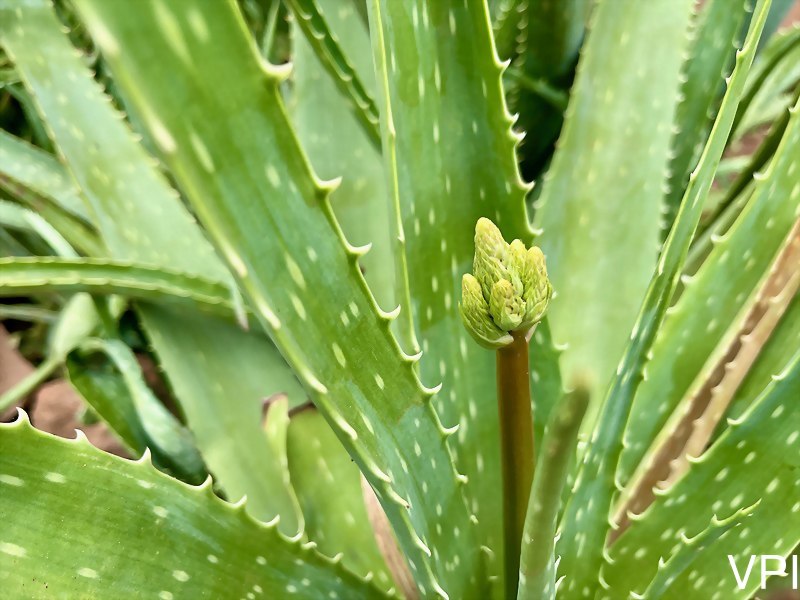
Aloe vera has large and fleshy leaves that are often rosette-shaped or arranged at the top. The leaves are usually lanceolate or short and wide, with pointed tooth-like spines along the edges. The inflorescence can be umbel, cymose, spicate, or conical in shape, with colors ranging from red, yellow to having red spots. It has six petals and six stamens, with the base of the flower often fused into a tubular shape. Aloe vera is native to the Mediterranean and Africa, and there are various wild species. However, as of 2013, only six varieties have been confirmed for use in food, cosmetics, and medicinal health products, such as Aloe vera var. chinensis, Aloe vera var. barbadensis, Aloe vera var. arborescens, and Aloe vera var. capensis, while the rest are mostly used as ornamental plants. According to historical records, aloe vera was introduced to China via the Silk Road during the Han Dynasty. It is currently cultivated in Fujian, Guangdong, Guangxi, Sichuan, Yunnan, and other regions, and also exists in the wild. Aloe vera is a versatile plant that combines uses in food, medicine, beauty, and ornamental purposes. Its exudate (mainly containing aloesin) has been widely used in medicine and cosmetics. In Chinese folk medicine, aloe vera is regarded as a natural remedy for beauty, hair care, and treating skin diseases.
【Efficacy Overview】
Aloe vera has a long history of medicinal use in China. According to historical records and expert speculation, aloe had already become a commonly used folk medicine even before the Tang Dynasty. In places like Yuanjiang in Yunnan, Nan in Guangdong, Leizhou Island in Guangdong, Hainan Island, and Taiwan, people have traditionally applied aloe vera for various purposes.
ssssssssssssssssssssssssssssssssssssssssssssssssssssssssssssssssssssssssssssssssssssssssssssssssssssssssssssssssssssss
The "Compendium of Chinese Materia Medica" categorizes the properties, effects, and main uses of Aloe Vera as follows:
Aloe Vera (dried slices): It has a cold nature and a bitter taste. It enters the liver, heart, and spleen meridians. It has the effects of clearing heat, promoting bowel movements, and killing parasites. It can be used to treat heat accumulation leading to constipation, menstrual blockage in women, childhood convulsions, accumulation of worms due to malnutrition, ulcerations, hemorrhoids, atrophic rhinitis, and lymphadenitis. It is commonly prepared in pill form for oral administration.
Aloe Vera Leaves: They have a cold nature and a bitter and astringent taste. They possess the effects of clearing heat, regulating menstruation, killing parasites, and detoxification. They can be used to treat turbid leukorrhea, hematuria, irregular menstruation and excessive vaginal discharge in women, childhood convulsions, malnutrition, burns, and tumors. They are typically decocted for internal use or crushed for external application.
Aloe Vera Flowers: They can be used to treat cough, hemoptysis, turbid leukorrhea, and infants with closed eyes during menstruation. They are usually decocted for internal administration or used as a wash for affected areas.
Aloe Vera Roots: They can be used to treat childhood malnutrition and urinary tract infections. They are decocted in water for oral administration.
【Historical Background and Comments by Prominent Figures】
The history of Aloe Vera's introduction to China can be traced back to the years before and during the Han Dynasty, when Emperor Wu of Han dispatched Zhang Qian on two separate missions to the Western Regions, thus opening up the famous Silk Road. This facilitated the exchange of goods and culture between the East and the West, and also brought Aloe Vera into China. "Pharmacological Treatises" recorded: "It kills intestinal worms in children and treats nasal inflammation and itching caused by brain parasites." The "Compendium of Sea Materia Medica" mentioned: "It treats various childhood febrile diseases." The "Compendium of Materia Medica" stated: "It treats symptoms such as restlessness and heat in the chest and abdomen, improves eyesight, calms the mind, and is effective against childhood convulsions, five types of malnutrition, parasites, hemorrhoids, and painful sores. It also counteracts the toxicity of croton seeds." The "Illustrated Classic of Materia Medica" recorded: "It treats eczema characterized by yellow discharge after scratching and also toothache." The "Proper Identification of Materia Medica" mentioned: "It disperses lymphadenitis, treats convulsions, calms the mind, improves eyesight, promotes diuresis, and reduces swelling." The first record of Aloe Vera dates back to 6 AD. The extensive knowledge of herbal medicine by the renowned ancient surgeon Dioscorides is documented in the book "De Materia Medica," which provides clear and accurate information about Aloe Vera from Curaçao.
ssssssssssssssssssssssssssssssssssssssssssssssssssssssssssssssssssssssssssssssssssssssssssssssssssssssssssssssssssssss
Activity: Aloe vera has therapeutic and preventive effects on diabetes and its complications. Anti-aging: Mucilaginous substances in aloe vera are important components in preventing cellular aging and treating chronic allergies. Mucopolysaccharides are present in tissues such as muscles and gastrointestinal mucosa, providing elasticity. Insufficient mucopolysaccharides can lead to stiffness and aging of muscles and mucosa, while cells lacking mucopolysaccharides gradually decline and lose their ability to defend against pathogens and viruses. Additionally, mucopolysaccharides have body-strengthening and fertility-enhancing effects.
Antitumor: Aloe vera has the ability to inhibit the absorption of carcinogens by mouse embryonic cells and prevent the formation of carcinogen-NA adducts. It also increases the activity of peptide cleaving enzymes, acting as a tumor preventive agent. Aloe-emodin, through the B and Fas death pathways, induces apoptosis in human lung squamous cell carcinoma cell line CH27 by activating caspase-m7, caspase-8, and caspase. It also inhibits the activity of protein kinase C, reducing the protein content of its isoforms, thereby suppressing the growth of cancer cells.
Analgesic and sedative: When experiencing swollen fingers or unbearable toothache, applying fresh aloe vera leaves to the affected area can alleviate pain. Internal or external use of aloe vera also provides analgesic effects. Aloe vera can also prevent and treat hangovers, motion sickness, and seasickness.
Moisturizing and beauty-enhancing: A combination of aloe vera and vitamins has excellent moisturizing, nourishing, and whitening effects on the skin. It is particularly effective in treating acne, which is a common concern for teenagers. Components such as aloe-emodin make the hair soft, shiny, and dandruff-free, providing a refreshing sensation.
Detoxification: Certain components in aloe vera have the ability to break down harmful substances within the body and eliminate externally acquired toxins. During radiation therapy or exposure to nuclear radiation, it often causes burn-related skin ulcers. Using aloe vera for treatment not only detoxifies and reduces inflammation but also promotes the regeneration of new cells, as well as increases the depleted white blood cell count caused by radiation therapy.
Gastrointestinal regulation: Active ingredients in aloe vera, such as aloe-emodin and aloe-emodin, promote appetite and alleviate intestinal discomfort. Taking aloe vera can strengthen bone function and enhance overall physical condition. For critically ill patients with weak constitution and loss of appetite, aloe vera can help restore their appetite.
Defense: Natural compounds derived from aloe vera can absorb ultraviolet rays, preventing skin redness and brown spots.
【Medicinal Value】 Aloe vera contains various beneficial components such as enzymes, polysaccharides, amino acids, organic acids, vitamins, terpenoids, mineral salts, and trace elements. These components exhibit high biological activity, which is advantageous for facilitating the body's healing process and enhancing the immune response. Modern medical research has confirmed the medicinal value of aloe vera.
Antibacterial and Anti-inflammatory: Aloe vera contains a substance called aloe emodin, which exhibits strong antibacterial properties, inhibiting the reproduction of pathogens and directly killing bacteria. Aloe emodin can also weaken the infectivity of influenza and herpes simplex viruses. The polyphenols present in aloe vera help enhance the body's resistance and combat inflammation, providing good therapeutic effects for conditions such as dermatitis, chronic inflammation, cystitis, bronchitis, pharyngitis, oral inflammation, and rhinitis.
Liver Protection and Gastric Ulcer Prevention: Aloe emodin can alleviate the inflammatory response and lipid peroxidation damage in non-alcoholic fatty liver disease. Aloe extract inhibits the secretion of acetylcholine by the vagus nerve, thereby suppressing gastric acid secretion and exerting a protective effect on the stomach.
Improved Blood Circulation and Vascular Softening: Calcium citrate isolated from aloe vera leaves acts as a potent vasodilator and enhances blood circulation. It exerts a strong dilating effect on peripheral blood vessels in internal organs, hands, feet, and even the scalp. The flavonoids in aloe vera have a positive inotropic effect and can remove cholesterol, thereby softening hardened blood vessels and maintaining normal blood pressure.
Immunomodulatory Effect: Aloe polysaccharides can bind to specific proteins on the surface of lymphocytes, activating B lymphocytes through the complement system and enhancing the synthesis of antibodies. This enhances the body's immune response and boosts immunity.
【Dietary Health】 Aloe vera, as a medicinal herb with a food-like nature, can be consumed directly or processed into various foods and beverages. Aloe vera has been widely used as a raw material or additive in health foods and beverages. In the United States and Japan, this industry is well-developed, and aloe vera products can be found everywhere. In recent years, the popularity of aloe vera has grown in many households due to its rich nutritional content and unique medicinal and health benefits. For example, Americans use aloe vera as a health food and create aloe vera sandwiches, salads, juice, candies, and more. In Japan, aloe vera is trendy in health products and is made into various delicious foods, medicinal wines, juices, such as aloe vera stir-fried tomatoes with squid ink, aloe vera scrambled eggs, aloe vera noodles, pastries, and more. In countries like Australia, New Zealand, Indonesia, India, Thailand, and Singapore, many people consider consuming aloe vera as a normal practice, viewing it as a simple and convenient way to enhance their health and well-being. Aloe vera contains elements and substances that closely match the needs of human cells, making it highly valuable for health and earning it the reputation of a "family medicine cabinet." In Japan, aloe vera is referred to as the "family doctor," and it is common for households to have a few potted aloe vera plants. Modern medical research has shown that long-term consumption of fresh aloe vera leaves or oral intake of formulated aloe vera liquids can enhance the body's immune system, regulate bodily functions, and improve symptoms of various chronic diseases. The gel-like substance in aloe vera has significant health benefits, and long-term consumption can contribute to longevity.
【Suitable Individuals】 Aloe vera has significant effects on improving immune function, antibacterial and anti-inflammatory actions, anti-tumor properties, treating burns, and protecting the liver. It is highly valued in medical applications and is commonly used in internal medicine, external medicine, dermatology, pediatrics, and gynecology. Clinical evidence has confirmed that aloe vera has a good therapeutic effect on various conditions such as hypertension, heart disease, diabetes, liver diseases, gastric diseases, intestinal diseases, and skin diseases. Additionally, aloe vera has cosmetic and health benefits, including improving skin texture, reducing wrinkles, moisturizing, and promoting wound healing. Consuming aloe vera is a good choice for individuals who want to enhance their immune system, improve their physical condition, treat chronic diseases, and care for their skin. However, due to its heat-clearing and purging effects, it is not advisable for individuals with weak spleen and stomach or loose stools to consume excessive amounts of aloe vera. Moreover, pregnant women, lactating women, and individuals taking specific medications should consume aloe vera under the guidance of a healthcare professional.